Operational vs Informational Systems in Data Warehousing
Verified Concept Article • Factual Traceability Enabled
Summary OverviewOperational systems manage real‑time transactions while informational systems provide historical, subject‑oriented data for decision‑making within a data warehouse architecture.
Operational Systems
Operational systems, also known as OLTP (online transaction processing) systems, are the backbone of day‑to‑day business activities. As described in Source 1, they "run the business on a current basis" and maintain the most recent state of the enterprise—customer orders, inventory levels, and financial postings. Their primary focus is on fast, reliable transaction processing, ensuring data integrity through mechanisms such as concurrency control, recovery, and strict ACID properties. Because they capture only the current value of data, operational databases often lack a built‑in notion of time; a key structure may or may not contain an explicit time element (Source 3).
Informational Systems
Informational systems, in contrast, are designed to support managerial decision‑making. They provide a broader, historical view of the organization, enabling analysis of trends, patterns, and forecasts (Source 1). These systems are embodied by the data warehouse, which, per Source 4, is "subject‑oriented, integrated, time‑variant and non‑volatile". The warehouse aggregates data around major subjects such as customers, products, or sales (Source 2), and stores it for extended periods—often five to ten years or more (Source 3). This time‑variant nature allows analysts to query past snapshots and perform predictive modeling.
Key Architectural Distinctions
Subject Orientation
A data warehouse organizes information around business subjects rather than the applications that generate the data (Source 2). This abstraction simplifies analysis by presenting a concise view of each domain and excluding operational details that are irrelevant to decision support.
Time Variant & Non‑Volatile
Operational databases reflect the present moment, whereas a warehouse records historical states (Source 3). Once data is loaded into the warehouse, it becomes non‑volatile: it is not updated by routine transactions (Source 5). The warehouse therefore requires only two operations—initial loading (ETL) and data access—eliminating the need for transaction processing, recovery, or concurrency control.
Integration
Data warehouses integrate heterogeneous sources—relational tables, flat files, and online transaction records—through ETL processes that cleanse and standardize data (Source 10). Consistent naming, encoding, and measurement conventions ensure that disparate systems speak a common language within the warehouse.
Operational Data Store (ODS) and Data Marts
An Operational Data Store bridges the gap between real‑time operational data and the historical warehouse. As shown in Sources 6 and 9, an ODS holds current, near‑real‑time data that can feed dependent data marts, enabling quicker access to fresh information without compromising the warehouse’s non‑volatile nature. Logical data marts are often implemented as views on the warehouse rather than separate physical databases, simplifying creation and maintenance (Source 6).
Implications for Data‑Warehouse Design
Understanding the dichotomy between operational and informational systems guides the design of extraction‑transform‑load (ETL) pipelines, schema selection, and storage strategies. Designers must capture both the instantaneous transactional state for operational reporting and the long‑term, subject‑oriented snapshots required for analytical workloads. By separating these concerns—operational systems for day‑to‑day processing and a non‑volatile, time‑variant warehouse for decision support—organizations achieve both operational efficiency and strategic insight.
Visual References from Cited Pages
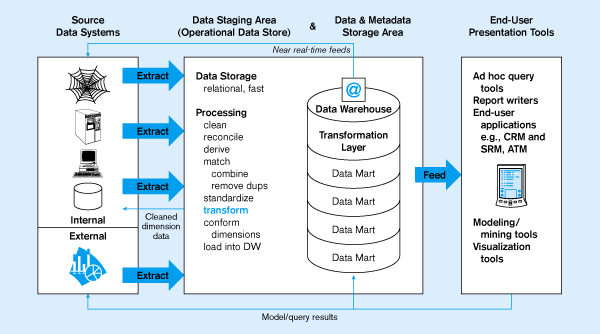
Figure 1: Diagram illustrating the relationship between logical data marts, ODS, and the data warehouseSource: ETLmodelling.pdf (Page 18)
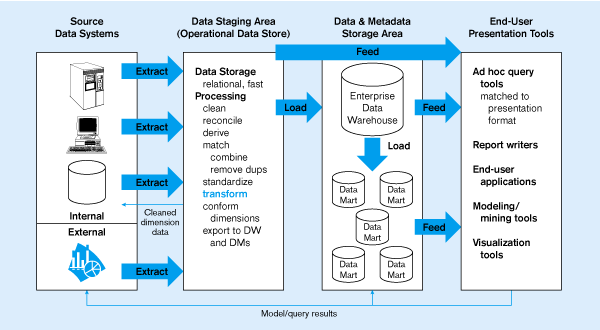
Figure 2: Diagram of dependent data mart architectureSource: ETLmodelling.pdf (Page 17)

Figure 3: Diagram of data warehouse architecturesSource: ETLmodelling.pdf (Page 14)
Related Topics
Incoming Backlinks
Other pages in this wiki that link back to the current topic.