Field Mapping Strategies in Data Transformation
Verified Concept Article • Factual Traceability Enabled
Summary OverviewField mapping strategies define how source data fields are converted, combined, or expanded into target warehouse fields during the transformation phase of ETL.
Overview of Field Mapping Strategies
Field mapping is a core activity within the Transform step of the ETL process (Source 6). It determines how raw operational data are reshaped to fit the dimensional schema of a data warehouse. Effective mapping bridges the semantic gap between source systems and analytical models, ensuring data quality, consistency, and query performance. Mapping decisions are closely tied to data reconciliation activities, where transformed data are validated before loading (Source 5, 4).
Single-Field Transformations
Single‑field transformations operate on a one‑to‑one basis: a source attribute is converted into a target attribute using a deterministic rule. Typical mechanisms include algorithmic formulas (e.g., applying a tax rate), logical expressions (e.g., flagging records that meet a condition), or table look‑ups that replace codes with descriptive values (Source 2). These transformations are the building blocks for more complex pipelines and are documented in the sub‑article Single-Field Transformations.
Multifield Transformations
Multifield mapping extends the one‑to‑one paradigm to many‑to‑one (M:1) or one‑to‑many (1:M) relationships (Source 1). In an M:1 scenario, several source fields are aggregated, concatenated, or mathematically combined to produce a single target field—for example, deriving a total sales amount from quantity and unit price columns. Conversely, a 1:M mapping distributes a single source value across multiple target attributes, such as splitting a full address into street, city, and postal code components. These patterns are explored in depth in the sub‑article Multifield Transformations: Many-to-One and One-to-Many Field Mapping.
Role in Data Reconciliation
During data reconciliation, field‑level operations are classified as selection, joining, aggregation, and aggregation‑to‑multiple (Source 5). Selection partitions records, while joining merges rows from different sources based on key fields. Aggregation summarizes many source rows into a single target value, exemplifying an M:1 transformation. The reciprocal one‑to‑many mapping often follows aggregation when the summarized metric must be distributed across downstream dimensions. After transformation, the Load/Index step materializes the mapped data in the warehouse and creates indexes to support analytical queries (Source 4).
Integration with ETL Architecture
Field mapping strategies are implemented within the broader ETL architecture, which may follow generic two‑level, three‑layer, or data‑mart‑centric designs (Source 8, 9). Independent data marts, for instance, often require bespoke ETL pipelines where field mappings are tailored to the mart’s limited scope. Regardless of architecture, the transformation stage consistently applies the same mapping logic before data are written to the target store.
Best Practices and Design Considerations
- Document Mapping Rules – Maintain a mapping specification that records source‑to‑target relationships, transformation formulas, and lookup tables. This aids reproducibility and auditability.
- Prefer Declarative Logic – Use SQL or dedicated ETL expression languages for algorithmic transformations to leverage database optimizations.
- Validate at Field Level – Perform record‑level and field‑level validation checks after transformation to catch mismatches early (Source 5).
- Handle Nulls and Data Types – Explicitly define how missing values and type conversions are treated to avoid loading errors.
- Reusability – Encapsulate common M:1 or 1:M patterns into reusable components, especially in environments with multiple data marts (Source 9).
Conclusion
Field mapping strategies—ranging from simple single‑field conversions to sophisticated many‑to‑one and one‑to‑many transformations—are pivotal for successful data warehousing. They directly influence data reconciliation, loading efficiency, and the analytical value of the warehouse. By grounding mapping decisions in clear rules, validating at the field level, and aligning with the chosen ETL architecture, organizations can ensure that transformed data faithfully represent business realities and support robust decision‑making.
Visual References from Cited Pages
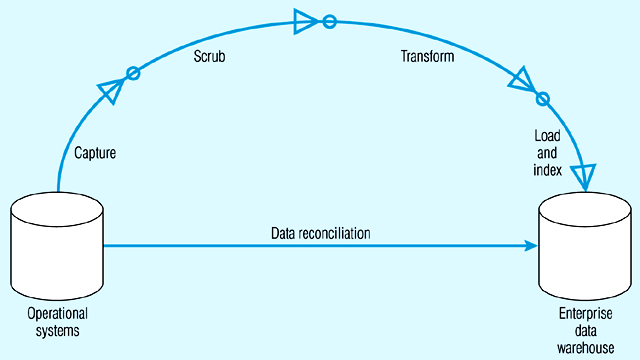
Figure 1: Data reconciliation steps diagramSource: ETLmodelling.pdf (Page 24)
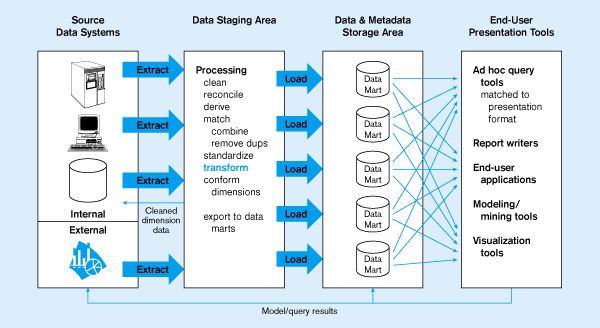
Figure 2: Illustration of an Independent Data MartSource: ETLmodelling.pdf (Page 16)
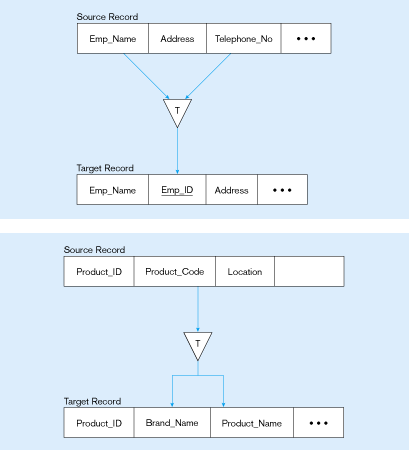
Figure 3: Multifield transformationSource: ETLmodelling.pdf (Page 26)
Subtopics & Sections
Multifield transformations map multiple source fields to a single target field or a single source field to multiple target fields within ETL processes.
Single-field transformations map an individual source attribute to a single target attribute using formulaic or lookup‑based rules within the ETL pipeline.
Related Topics
Incoming Backlinks
Other pages in this wiki that link back to the current topic.
## ETL modelling - Overview
A comprehensive guide to ETL modelling that integrates conceptual design, multidimensional schemas, data‑warehouse architectures, and transformation techniques for robust data reconciliation.
Single-Field Transformations
Single-field transformations map an individual source attribute to a single target attribute using formulaic or lookup‑based rules within the ETL pipeline.
Multifield Transformations: Many-to-One and One-to-Many Field Mapping
Multifield transformations map multiple source fields to a single target field or a single source field to multiple target fields within ETL processes.