ETL Workflow and Its Role in Data Reconciliation
Verified Concept Article • Factual Traceability Enabled
Summary OverviewThe ETL workflow—capture, scrub, transform, and load/index—provides the systematic backbone for reconciling operational data into a clean, historical, and query‑ready data warehouse.
Overview of the ETL Workflow
The Extract‑Transform‑Load (ETL) process is the cornerstone of data warehousing, converting raw operational feeds into a structured repository that supports analysis and reporting. As defined in the foundational ETL model, the workflow consists of four sequential phases: Capture (extract), Scrub (data cleansing), Transform, and Load/Index. Each phase contributes specific validation and restructuring steps that collectively achieve data reconciliation—aligning source data with the warehouse’s quality, consistency, and historical requirements.
Capture: Extracting a Reliable Snapshot
Capture, or extraction, involves taking a snapshot of the source system’s data for ingestion. Two common extraction strategies are employed: static extracts, which capture the entire selected dataset at a single point in time, and incremental extracts, which retrieve only the changes that have occurred since the previous load. By isolating the exact data to be processed, capture establishes the baseline against which reconciliation checks (e.g., row counts, checksum comparisons) are performed.
Scrub: Elevating Data Quality
The scrub phase applies pattern‑recognition, rule‑based, and increasingly AI‑driven techniques to cleanse the data. Typical issues addressed include misspellings, erroneous dates, incorrect field usage, duplicate records, and mismatched addresses. Cleaning transforms poor‑quality, transient operational data—often denormalized for performance—into a quality‑controlled form that meets integrity constraints before further processing.
Transform: Converting Structure and Semantics
Transformation reshapes data from the operational format to the warehouse schema. It operates at multiple granularities:
- Record‑level and field‑level transformations adjust individual rows or columns.
- Selection (partitioning) isolates subsets of data for specific downstream uses.
- Single‑field transformations apply functions, algorithmic formulas, or lookup tables to convert a value from its old representation to a new one.
- Joining combines multiple source fields into a single target field, or merges rows from disparate tables.
- Aggregation summarizes detailed rows into higher‑level metrics, supporting analytical queries.
These operations ensure that the warehouse stores detailed, normalized, and historically consistent data, as required for enterprise‑wide reconciliation.
Load/Index: Persisting Reconciled Data
During the load phase, transformed data is written to the warehouse and appropriate indexes are created to accelerate query performance. Two loading strategies are common:
- Refresh (bulk) mode, which rewrites the entire target dataset at scheduled intervals.
- Update mode, which applies only the incremental changes detected during capture. Both modes rely on reconciliation checks—such as row‑level audits and checksum verification—to confirm that the target reflects the intended source state.
The Role of ETL in Data Reconciliation
Data reconciliation seeks to guarantee that the warehouse accurately mirrors the source’s logical content while enhancing its quality. The ETL workflow achieves this by:
- Establishing a reproducible extraction point (capture) that defines the scope of comparison.
- Eliminating anomalies through systematic scrubbing, thereby reducing inconsistencies.
- Standardizing formats and relationships via transformation, enabling reliable joins and aggregations.
- Ensuring integrity at load time with index creation and validation routines.
Through these coordinated steps, ETL not only moves data but also validates, enriches, and aligns it, turning transient operational records into a comprehensive, historical, and normalized data warehouse ready for analytical consumption.
Visual References from Cited Pages
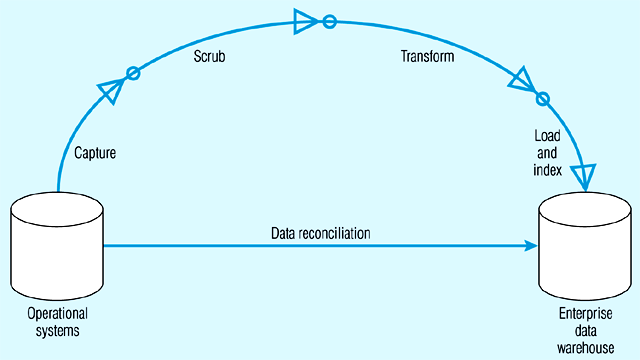
Figure 1: Illustration of data reconciliation stepsSource: ETLmodelling.pdf (Page 21)
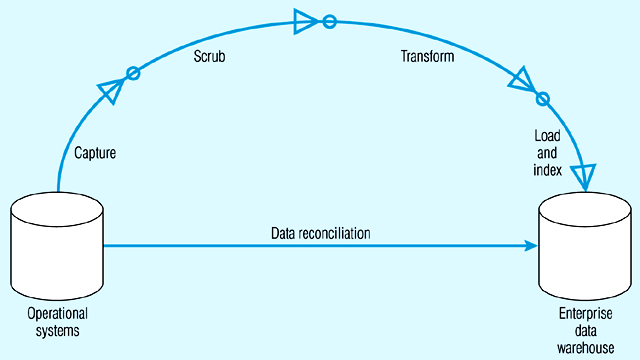
Figure 2: Data reconciliation steps diagramSource: ETLmodelling.pdf (Page 24)
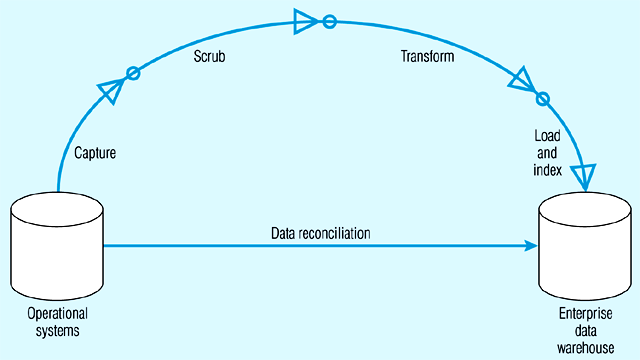
Figure 3: Steps in data reconciliation – transformation and data processing operationsSource: ETLmodelling.pdf (Page 23)
Related Topics
Incoming Backlinks
Other pages in this wiki that link back to the current topic.