## ETL modelling - Overview
Verified Concept Article • Factual Traceability Enabled
Summary OverviewA comprehensive guide to ETL modelling that integrates conceptual design, multidimensional schemas, data‑warehouse architectures, and transformation techniques for robust data reconciliation.
Conceptual Foundations
The discipline of ETL modelling begins with a clear conceptual representation of the data warehouse, where facts, their temporal properties, and associated dimensions are captured in a way that mirrors real‑world business processes. As described in Conceptual Modeling and Fact Definition in Data Warehousing, facts are treated as events that evolve over time, and each fact is linked to a temporal dimension that records when the event occurred. This conceptual layer also distinguishes dimensions, organizes them into hierarchies, and records the relationships among objects, providing the blueprint for later physical implementations. The importance of representing facts and dimensions is echoed throughout the overview, reinforcing the need for a solid conceptual model before any ETL logic is applied.
Multidimensional Modeling
Once the conceptual model is defined, it is translated into multidimensional structures that enable efficient analytical querying. The article Fundamentals of Multidimensional Data Modeling explains how facts, measures, and hierarchical dimensions are organized into cubes and schemas such as star, snowflake, and fact constellations. Multidimensional Data Modeling and Schema Designs for Data Warehouses expands on these designs, illustrating how a star schema centers a fact table surrounded by denormalized dimension tables for simplicity and performance, while a snowflake schema normalizes dimensions to reduce redundancy. Schema Variants in Dimensional Modeling further clarifies that each variant—star, snowflake, or fact constellation—serves distinct analytical and performance requirements, allowing designers to balance query speed against storage efficiency.
Architectural Patterns
Data‑warehouse architectures provide the structural context for ETL processes. Fundamentals and Architectural Models of Data Warehousing outlines core characteristics—subject‑orientation, integration, time‑variance, and non‑volatility—that shape a family of architectural models ranging from a generic two‑level design to more complex three‑layer configurations. The Core Characteristics and Architectural Models of Data Warehousing article details how these characteristics drive layered approaches, including independent data marts, dependent data marts linked to an Operational Data Store (ODS), and logical data marts that act as views over an active warehouse. Visuals from the source material show that dependent data marts benefit from a single ETL pipeline feeding multiple marts, simplifying data access and ensuring consistency across the enterprise.
ETL Workflow and Data Reconciliation
The ETL workflow is the engine that extracts operational data, cleanses it, transforms it, and finally loads it into the warehouse. ETL Workflow and Its Role in Data Reconciliation breaks the process into four stages: Capture, Scrub (or data cleansing), Transform, and Load/Index. The ETL Process reinforces this sequence, noting that capture can be performed as a static snapshot or an incremental extract that captures only changes since the last run. Data Reconciliation in the ETL Process for Data Warehousing emphasizes that reconciliation aligns transient, often denormalized operational data with a historical, normalized warehouse. The characteristics of operational data—transient, non‑normalized, limited in scope, and sometimes low quality—are described in Characteristics of Operational Data Impacting Reconciliation, highlighting the challenges that scrubbing and transformation must address.
During the Scrub phase, Data Scrubbing Techniques in Reconciliation outlines pattern‑recognition rules and AI‑driven methods that cleanse noisy records into a standardized format, ensuring that subsequent comparisons are accurate. The Transform stage is where field‑level mapping occurs. Field Mapping Strategies in Data Transformation defines how source fields are converted, combined, or expanded into target fields, while Single-Field Transformations details simple one‑to‑one conversions using functions, algorithms, or lookup tables. More complex scenarios are covered by Multifield Transformations: Many-to-One and One-to-Many Field Mapping, which explains many‑to‑one (M:1) consolidations and one‑to‑many (1:M) splits, providing the flexibility needed for rich analytical dimensions.
After transformation, the Load/Index step places the refined data into the warehouse and creates indexes to support fast querying. Steps in data reconciliation (continued) describes two loading modes: bulk rewriting for periodic refreshes and incremental updates that apply only changed records, ensuring that the warehouse remains both current and historically accurate.
Operational vs Informational Perspectives
Understanding the source systems is essential for effective ETL design. Operational vs Informational Systems in Data Warehousing contrasts transactional systems that manage real‑time business operations with informational systems that store historical, subject‑oriented data for decision‑making. Operational systems produce the raw, volatile data that must be captured, scrubbed, and reconciled, while informational systems benefit from the cleaned, integrated, and time‑variant data that the warehouse provides.
Field Mapping and Transformation Strategies
The practical implementation of transformations relies on a clear mapping strategy. Field Mapping Strategies in Data Transformation discusses the design of mapping rules, including direct mappings, derived calculations, and conditional logic. Single-Field Transformations illustrates how a single source attribute can be transformed using mathematical formulas, string functions, or lookup tables, while Multifield Transformations: Many-to-One and One-to-Many Field Mapping demonstrates how multiple source attributes can be concatenated into a composite key (M:1) or how a single source attribute can be split into multiple target columns (1:M) to support dimensional hierarchies. These strategies are essential for constructing the fact tables and dimension attributes described earlier in the multidimensional modeling sections.
Conclusion
Bringing together conceptual modelling, multidimensional schema design, architectural frameworks, and detailed ETL transformation techniques produces a cohesive data‑warehouse ecosystem. The interplay between Fundamentals and Architectural Models of Data Warehousing, Multidimensional Data Modeling and Schema Designs for Data Warehouses, and the various transformation articles ensures that data is not only integrated and stored efficiently but also cleansed and reconciled to support reliable analytics. By adhering to the core characteristics of data warehousing and leveraging robust ETL workflows, organizations can transform disparate operational feeds into a unified, historical, and query‑ready repository that drives informed decision‑making across the enterprise.
Visual References from Cited Pages
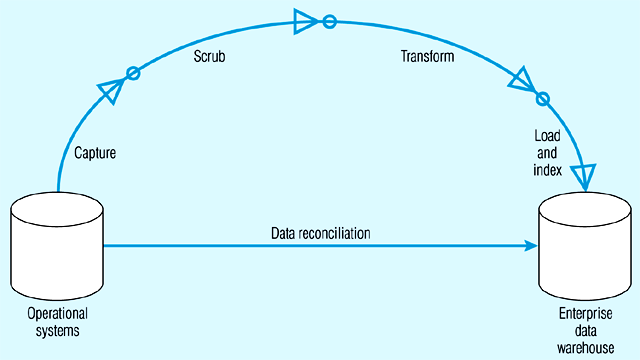
Figure 1: Illustration of data reconciliation stepsSource: ETLmodelling.pdf (Page 21)
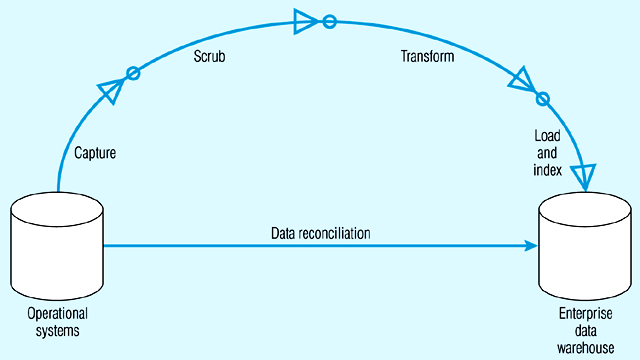
Figure 2: Data reconciliation steps diagramSource: ETLmodelling.pdf (Page 24)
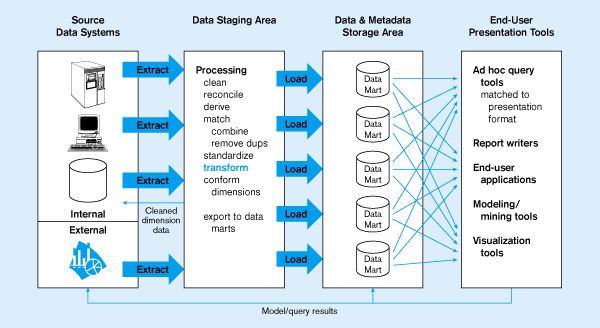
Figure 3: Illustration of an Independent Data MartSource: ETLmodelling.pdf (Page 16)
Subtopics & Sections
Data reconciliation in ETL aligns transient operational data with a historical, normalized warehouse through systematic extraction, cleansing, transformation, and loading.
Field mapping strategies define how source data fields are converted, combined, or expanded into target warehouse fields during the transformation phase of ETL.
The article outlines the fundamental principles and architectural patterns that define modern data warehouses, emphasizing their subject‑orientation, integration, time‑variance, and non‑volatility, and explains how various layered and mart‑based designs support decision‑making.
Multidimensional data modeling structures warehouse data into fact‑centric cubes and various schemas—star, snowflake, and fact constellations—to support efficient analytical querying.
Related Topics
Incoming Backlinks
Other pages in this wiki that link back to the current topic.
Fundamentals and Architectural Models of Data Warehousing
The article outlines the fundamental principles and architectural patterns that define modern data warehouses, emphasizing their subject‑orientation, integration, time‑variance, and non‑volatility, and explains how various layered and mart‑based designs support decision‑making.
Multidimensional Data Modeling and Schema Designs for Data Warehouses
Multidimensional data modeling structures warehouse data into fact‑centric cubes and various schemas—star, snowflake, and fact constellations—to support efficient analytical querying.
Data Reconciliation in the ETL Process for Data Warehousing
Data reconciliation in ETL aligns transient operational data with a historical, normalized warehouse through systematic extraction, cleansing, transformation, and loading.
Field Mapping Strategies in Data Transformation
Field mapping strategies define how source data fields are converted, combined, or expanded into target warehouse fields during the transformation phase of ETL.