Core Characteristics and Architectural Models of Data Warehousing
Verified Concept Article • Factual Traceability Enabled
Summary OverviewThe core characteristics of a data warehouse—being subject‑oriented, integrated, time‑variant, and non‑volatile—drive a family of architectural models ranging from simple two‑level designs to complex dependent and logical data‑mart configurations.
Core Characteristics of a Data Warehouse
A data warehouse (DW) is defined as a subject‑oriented, integrated, time‑variant, and non‑volatile collection of data that supports managerial decision making【1†L1-L4】. Subject‑orientation means the warehouse is organized around major business entities such as customers, products, or sales, providing analysts with a concise view that excludes operational details irrelevant to strategic analysis【7†L1-L4】. Integration is achieved by consolidating heterogeneous sources—relational databases, flat files, and online transaction records—while applying data‑cleaning and transformation techniques to enforce consistent naming, encoding, and measurement conventions across the enterprise【2†L1-L6】. Time‑variance distinguishes a warehouse from operational systems: data are stored with explicit or implicit timestamps, enabling historical queries that span many years rather than reflecting only the current state【10†L1-L5】. Finally, non‑volatility indicates that once data are loaded they are not updated by transaction processing; the warehouse serves as a read‑only repository that requires only initial loading and subsequent querying【8†L1-L4】.
Architectural Models
Several architectural patterns embody these characteristics, each balancing complexity, data freshness, and user accessibility.
Generic Two‑Level Architecture
The simplest model consists of a single, company‑wide warehouse populated through periodic extraction, transformation, and loading (ETL) processes【9†L1-L3】. Because extracts occur at intervals, the warehouse is not completely current, but it provides a unified, integrated view for enterprise‑wide analysis.
Three‑Layer Architecture
Expanding on the two‑level design, the three‑layer architecture adds distinct staging, integration, and presentation layers. The staging layer holds raw extracts, the integration layer applies cleansing and consolidates data, and the presentation layer offers subject‑oriented schemas (e.g., star or snowflake) for end‑user queries. All layers rely on ETL to maintain the non‑volatile, integrated nature of the warehouse.
Independent Data Mart
An independent data mart is a mini‑warehouse focused on a specific business line. Each mart has its own ETL pipeline, leading to separate data stores that may diverge in schema and refresh schedules【5†L1-L4】. While this approach simplifies localized reporting, it can create redundancy and inconsistencies across the enterprise.
Dependent Data Mart with Operational Data Store (ODS)
In a dependent design, a central enterprise data warehouse (EDW) feeds multiple data marts. An ODS sits between operational systems and the EDW, providing near‑real‑time data for operational reporting while the warehouse stores historical, time‑variant data【3†L1-L5】. This model benefits from a single ETL process for the EDW, reducing duplication and ensuring consistent integration across all dependent marts.
Logical Data Mart and @ctive Warehouse
The logical data mart concept treats data marts not as separate databases but as logical views of a unified, @ctive data warehouse. Near real‑time ETL keeps the underlying warehouse up to date, and new logical marts can be created rapidly by defining fresh views without moving data【6†L1-L5】. This architecture preserves the integrated, non‑volatile core while delivering the agility of independent marts.
Selecting an Architecture
Choosing among these models depends on business priorities: a two‑level or three‑layer architecture is ideal for organizations seeking a single source of truth and comprehensive historical analysis; independent marts suit decentralized units with unique reporting needs; dependent marts with an ODS balance operational immediacy and strategic insight; and logical marts provide the most flexible, view‑centric approach for fast‑changing analytical requirements.
Each architecture upholds the four foundational DW characteristics, ensuring that regardless of structural complexity, the warehouse remains a reliable, integrated, time‑aware, and immutable platform for decision support.
Visual References from Cited Pages
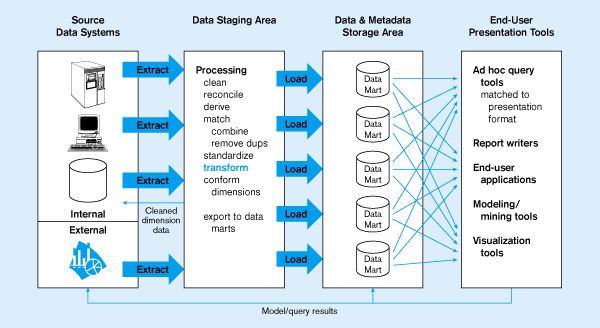
Figure 1: Illustration of an Independent Data MartSource: ETLmodelling.pdf (Page 16)
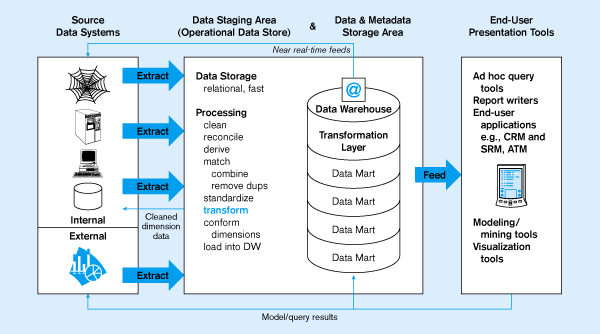
Figure 2: Diagram illustrating the relationship between logical data marts, ODS, and the data warehouseSource: ETLmodelling.pdf (Page 18)
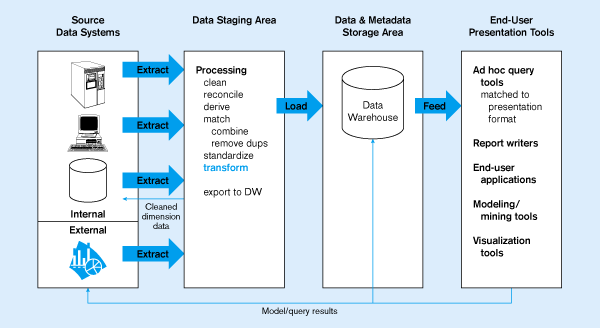
Figure 3: Generic two-level architecture diagramSource: ETLmodelling.pdf (Page 15)
Related Topics
Incoming Backlinks
Other pages in this wiki that link back to the current topic.