Data Reconciliation in the ETL Process for Data Warehousing
Verified Concept Article • Factual Traceability Enabled
Summary OverviewData reconciliation in ETL aligns transient operational data with a historical, normalized warehouse through systematic extraction, cleansing, transformation, and loading.
Overview of Data Reconciliation in ETL
Data reconciliation is the disciplined process that ensures the data moved from operational systems into a data warehouse is accurate, complete, and consistent with business rules. In the ETL (Extract‑Transform‑Load) pipeline, reconciliation bridges the gap between the volatile, often denormalized source environment and the stable, historical repository required for analytics. The process validates that each step—capture, scrub, transform, and load—produces a trustworthy copy of the original information while conforming to the warehouse’s quality standards.
Characteristics of Operational Data Impacting Reconciliation
Operational data typically exhibits several traits that complicate direct ingestion:
- Transient nature – records are frequently overwritten or deleted, providing only a snapshot of current activity.
- Denormalization – to boost transaction performance, tables may contain redundant fields, making field‑level mapping non‑trivial.
- Limited scope – source extracts often cover a subset of the enterprise, risking gaps in coverage.
- Variable quality – inconsistencies, misspellings, erroneous dates, and duplicate rows are common.
These attributes are highlighted in the source material (Source 4) and motivate the need for rigorous reconciliation before the data becomes part of the warehouse’s historical, normalized (3NF or higher) and comprehensive view.
ETL Workflow and Its Role in Data Reconciliation
The ETL workflow operationalizes reconciliation through four tightly coupled stages (Source 1, Source 2):
- Capture (Extract) – A static or incremental snapshot of the chosen source subset is obtained. Static extracts provide a point‑in‑time view, while incremental extracts capture only changes since the previous run, reducing load and enabling near‑real‑time updates.
- Scrub (Data Cleansing) – This stage applies pattern‑recognition, AI‑driven validation, and rule‑based corrections to address misspellings, wrong field usage, erroneous dates, and duplicate records (Source 3). Techniques such as key generation, address standardization, and error logging are essential for converting noisy operational data into a quality‑controlled form.
- Transform – Data is reshaped from the operational format to the warehouse schema. Transformations include field‑level selections, joins across multiple source tables, aggregations for summarization, and partitioning for record‑level segregation (Source 5). The objective is to produce a normalized, historical dataset ready for analytical consumption.
- Load/Index – The final stage writes the transformed data into the warehouse and creates indexes that support efficient query performance. Load strategies may be bulk refreshes or incremental updates, depending on the refresh mode (Source 6).
Each phase generates audit trails and reconciliation checkpoints, allowing data engineers to compare row counts, checksums, and business metrics between source and target. Discrepancies trigger re‑execution of earlier steps or targeted remediation.
Data Scrubbing Techniques in Reconciliation
Effective scrubbing combines deterministic rules with probabilistic methods. Deterministic rules handle straightforward errors such as date format mismatches or mandatory field violations. Probabilistic approaches, often powered by machine learning, detect subtle anomalies like outlier transaction amounts or inconsistent naming conventions. The source outlines a broad spectrum of fixes—re‑formatting, decoding, merging, and duplicate elimination—illustrating that a layered approach yields the highest data fidelity.
Outcomes and Benefits
After successful reconciliation, the warehouse stores data that is:
- Detailed – raw transactional granularity is retained before any analytical summarization.
- Historical – periodic snapshots enable trend analysis across time.
- Normalized – adherence to third normal form (or higher) eliminates redundancy.
- Comprehensive – an enterprise‑wide perspective replaces the limited scope of operational extracts.
- Quality‑controlled – integrity constraints, referential checks, and audit logs guarantee accuracy.
These attributes empower business intelligence, reporting, and advanced analytics with confidence that the underlying data faithfully represents the source reality.
Related Articles
- Characteristics of Operational Data Impacting Reconciliation – explores source‑system nuances that drive cleansing requirements.
- ETL Workflow and Its Role in Data Reconciliation – provides a deeper dive into each ETL phase and its reconciliation checkpoints.
- Data Scrubbing Techniques in Reconciliation – examines specific algorithms and tools for error detection and correction.
By integrating systematic reconciliation into the ETL pipeline, organizations transform volatile operational feeds into a reliable, analytics‑ready data warehouse.
Visual References from Cited Pages
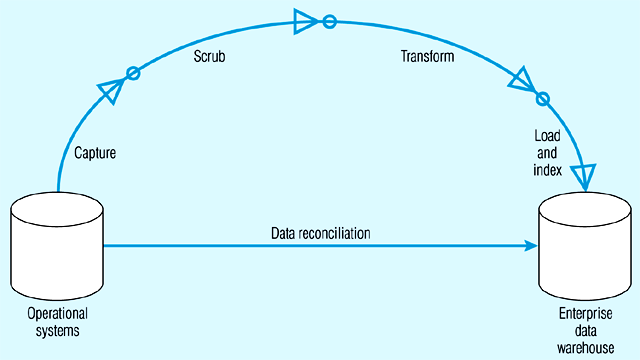
Figure 1: Illustration of data reconciliation stepsSource: ETLmodelling.pdf (Page 21)
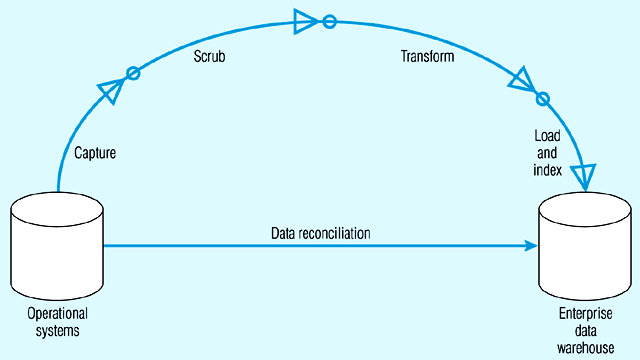
Figure 2: Illustration of data reconciliation stepsSource: ETLmodelling.pdf (Page 22)
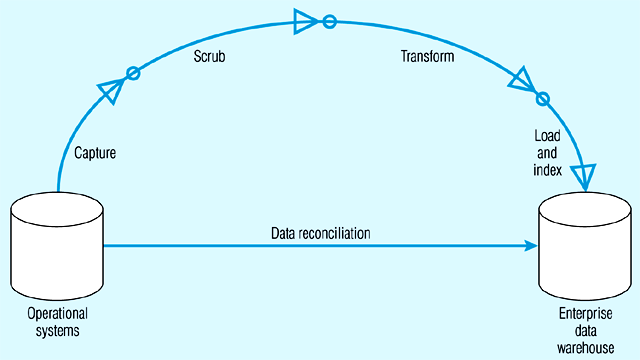
Figure 3: Steps in data reconciliation – transformation and data processing operationsSource: ETLmodelling.pdf (Page 23)
Subtopics & Sections
Operational data’s transient, denormalized, limited‑scope, and often low‑quality nature directly shapes the challenges and techniques of data reconciliation in ETL pipelines.
Data scrubbing techniques cleanse and transform operational data during ETL reconciliation to ensure high‑quality, consistent warehouse content.
The ETL workflow—capture, scrub, transform, and load/index—provides the systematic backbone for reconciling operational data into a clean, historical, and query‑ready data warehouse.
Related Topics
Incoming Backlinks
Other pages in this wiki that link back to the current topic.
## ETL modelling - Overview
A comprehensive guide to ETL modelling that integrates conceptual design, multidimensional schemas, data‑warehouse architectures, and transformation techniques for robust data reconciliation.
Characteristics of Operational Data Impacting Reconciliation
Operational data’s transient, denormalized, limited‑scope, and often low‑quality nature directly shapes the challenges and techniques of data reconciliation in ETL pipelines.
ETL Workflow and Its Role in Data Reconciliation
The ETL workflow—capture, scrub, transform, and load/index—provides the systematic backbone for reconciling operational data into a clean, historical, and query‑ready data warehouse.
Data Scrubbing Techniques in Reconciliation
Data scrubbing techniques cleanse and transform operational data during ETL reconciliation to ensure high‑quality, consistent warehouse content.