Wiki Overview
Conceptual Foundations
The discipline of ETL modelling begins with a clear conceptual representation of the data warehouse, where facts, their temporal properties, and associated dimensions are captured in a way that mirrors real‑world business processes. As described in Conceptual Modeling and Fact Definition in Data Warehousing, facts are treated as events that evolve over time, and each fact is linked to a temporal dimension that records when the event occurred. This conceptual layer also distinguishes dimensions, organizes them into hierarchies, and records the relationships among objects, providing the blueprint for later physical implementations. The importance of representing facts and dimensions is echoed throughout the overview, reinforcing the need for a solid conceptual model before any ETL logic is applied.
Multidimensional Modeling
Once the conceptual model is defined, it is translated into multidimensional structures that enable efficient analytical querying. The article Fundamentals of Multidimensional Data Modeling explains how facts, measures, and hierarchical dimensions are organized into cubes and schemas such as star, snowflake, and fact constellations. Multidimensional Data Modeling and Schema Designs for Data Warehouses expands on these designs, illustrating how a star schema centers a fact table surrounded by denormalized dimension tables for simplicity and performance, while a snowflake schema normalizes dimensions to reduce redundancy. Schema Variants in Dimensional Modeling further clarifies that each variant—star, snowflake, or fact constellation—serves distinct analytical and performance requirements, allowing designers to balance query speed against storage efficiency.
Architectural Patterns
Data‑warehouse architectures provide the structural context for ETL processes. Fundamentals and Architectural Models of Data Warehousing outlines core characteristics—subject‑orientation, integration, time‑variance, and non‑volatility—that shape a family of architectural models ranging from a generic two‑level design to more complex three‑layer configurations. The Core Characteristics and Architectural Models of Data Warehousing article details how these characteristics drive layered approaches, including independent data marts, dependent data marts linked to an Operational Data Store (ODS), and logical data marts that act as views over an active warehouse. Visuals from the source material show that dependent data marts benefit from a single ETL pipeline feeding multiple marts, simplifying data access and ensuring consistency across the enterprise.
Visual References from Cited Pages
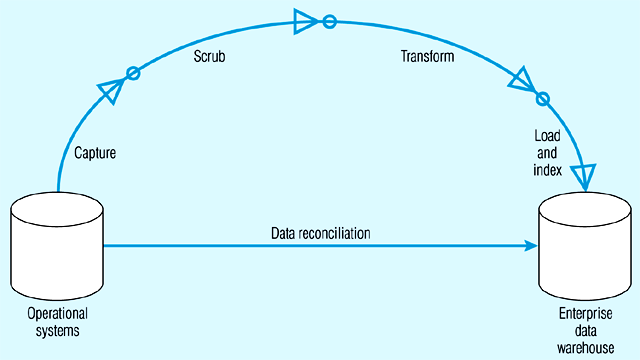
Figure 1: Illustration of data reconciliation stepsSource: ETLmodelling.pdf (Page 21)
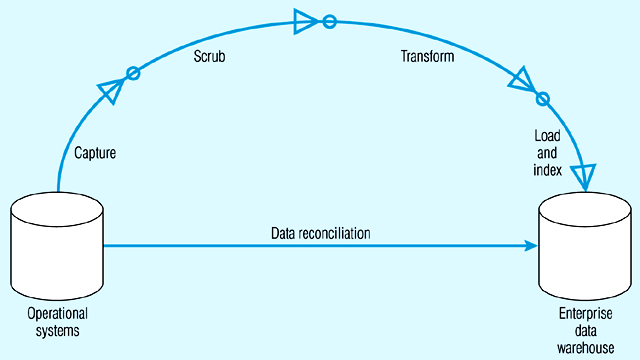
Figure 2: Data reconciliation steps diagramSource: ETLmodelling.pdf (Page 24)
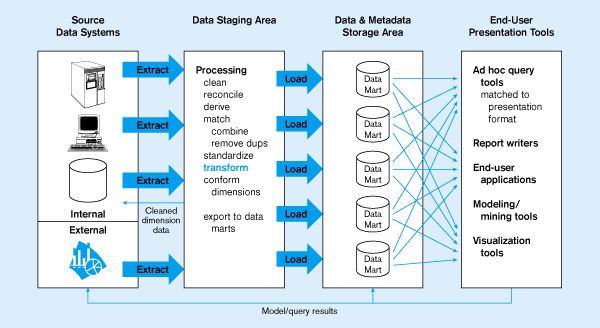
Figure 3: Illustration of an Independent Data MartSource: ETLmodelling.pdf (Page 16)
What You'll Learn
- Data Reconciliation in the ETL Process for Data Warehousing
- Field Mapping Strategies in Data Transformation
- Fundamentals and Architectural Models of Data Warehousing
- Multidimensional Data Modeling and Schema Designs for Data Warehouses
Main Topics & Knowledge Domains
Data Reconciliation in the ETL Process for Data Warehousing
Data reconciliation in ETL aligns transient operational data with a historical, normalized warehouse through systematic extraction, cleansing, transformation, and loading.
Field Mapping Strategies in Data Transformation
Field mapping strategies define how source data fields are converted, combined, or expanded into target warehouse fields during the transformation phase of ETL.
Fundamentals and Architectural Models of Data Warehousing
The article outlines the fundamental principles and architectural patterns that define modern data warehouses, emphasizing their subject‑orientation, integration, time‑variance, and non‑volatility, and explains how various layered and mart‑based designs support decision‑making.
Multidimensional Data Modeling and Schema Designs for Data Warehouses
Multidimensional data modeling structures warehouse data into fact‑centric cubes and various schemas—star, snowflake, and fact constellations—to support efficient analytical querying.