Characteristics of Operational Data Impacting Reconciliation
Verified Concept Article • Factual Traceability Enabled
Summary OverviewOperational data’s transient, denormalized, limited‑scope, and often low‑quality nature directly shapes the challenges and techniques of data reconciliation in ETL pipelines.
Nature of Operational Data
Operational systems—such as transaction processing, CRM, or ERP platforms—generally store data that is transient and not intended for long‑term historical analysis. Records are created, updated, and deleted as business events occur, meaning the data reflects the current state rather than a chronological archive. To meet performance requirements, these systems frequently employ denormalization, duplicating information across tables to reduce join complexity and accelerate query response times. Consequently, the data is not normalized to the third normal form (3NF) or higher, which complicates downstream integration.
Another hallmark of operational data is its restricted scope. Individual applications capture only the subset of information needed for their specific functional domain, resulting in a fragmented view of the enterprise. Moreover, operational feeds can exhibit poor quality, including inconsistencies, missing values, and outright errors caused by manual entry or system glitches. These characteristics collectively create a volatile source that must be carefully reconciled before it can serve analytical purposes.
Impact on Reconciliation Processes
The ETL (Extract‑Transform‑Load) workflow is explicitly designed to address the shortcomings of operational data. During the Capture phase, snapshots or incremental extracts are taken to obtain a consistent view of the source at a point in time. Because operational data may be incomplete or contain duplicate records, the subsequent Scrub (or data‑cleansing) step is essential for detecting and correcting errors, standardizing formats, and enforcing data‑type constraints.
Transformation is where the bulk of reconciliation occurs. Data must be converted from the operational format to the warehouse schema, often requiring record‑level and field‑level operations. Simple selection (partitioning) isolates relevant rows, while single‑field mapping transfers values directly. More complex joining combines multiple source fields into a unified target attribute, and aggregation summarizes transactional rows into higher‑level facts. These operations remedy the denormalized, fragmented nature of the source by producing a normalized, historical, and comprehensive dataset that aligns with the data‑warehouse’s dimensional model.
Desired Post‑ETL Characteristics
After reconciliation, the warehouse should contain data that is:
- Detailed: Individual transaction‑level rows are retained before any analytical summarization.
- Historical: Periodic snapshots create a time‑variant record, enabling trend analysis.
- Normalized: Structures meet at least 3NF, reducing redundancy and supporting integrity constraints.
- Comprehensive: An enterprise‑wide perspective integrates previously isolated operational silos.
- Quality‑controlled: Rigorous validation ensures accuracy, completeness, and referential integrity.
These attributes are critical for downstream reporting, data‑mart creation, and advanced analytics. Without proper reconciliation, analytical results can be misleading, and downstream applications—such as dashboards or predictive models—may inherit the operational data’s inconsistencies.
Conclusion
Understanding the intrinsic traits of operational data—its transience, denormalization, limited coverage, and potential quality issues—is fundamental to designing effective reconciliation strategies within the ETL process. By systematically capturing, cleansing, transforming, and loading data, organizations convert volatile operational feeds into a stable, reliable, and analytically valuable warehouse, thereby fulfilling the broader objectives of data‑reconciliation in modern data‑warehousing architectures.
Visual References from Cited Pages
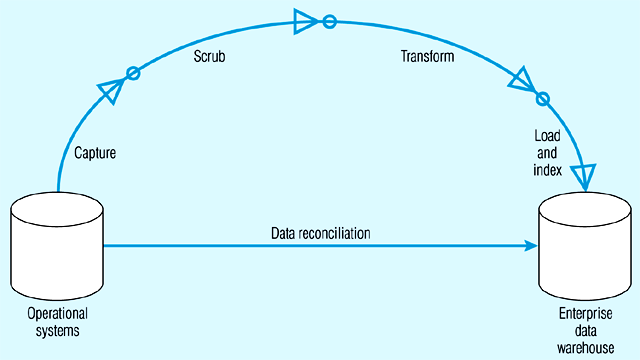
Figure 1: Illustration of data reconciliation stepsSource: ETLmodelling.pdf (Page 21)
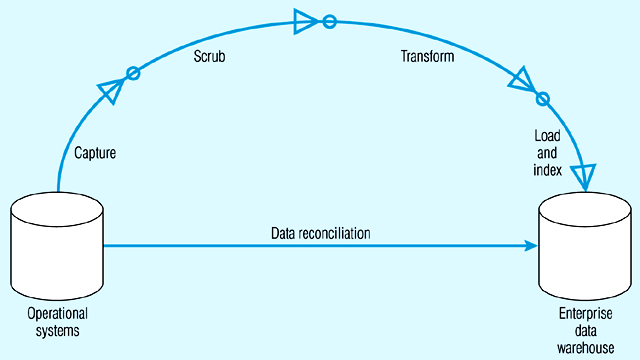
Figure 2: Data reconciliation steps diagramSource: ETLmodelling.pdf (Page 24)
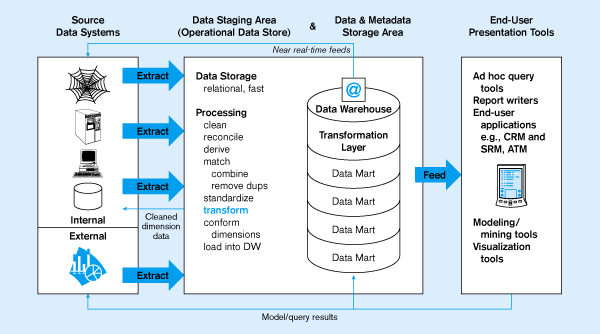
Figure 3: Diagram illustrating the relationship between logical data marts, ODS, and the data warehouseSource: ETLmodelling.pdf (Page 18)
Related Topics
Incoming Backlinks
Other pages in this wiki that link back to the current topic.