Wiki Overview
Overview
Hadoop is a free, open‑source framework under the Apache License that provides both distributed storage and distributed processing capabilities. As described in the introductory source, Hadoop moves computation to the location of the data rather than transferring data to the compute node, thereby reducing network traffic and increasing overall system throughput. Data is partitioned across a cluster of commodity machines, enabling parallel processing on each partition. Major cloud providers such as AWS, Google Cloud, and Microsoft Azure offer managed Hadoop services, reflecting its flexibility, scalability, reliability, and fault‑tolerant design. The platform rests on two fundamental pillars: the Hadoop Distributed File System (HDFS) for storage and the MapReduce programming model for processing.
hadoop/fundamentals-of-hadoop-architecture" class="text-[#6b38d4] font-semibold hover:underline">Fundamentals of Hadoop Architecture</a>
The hadoop/fundamentals-of-hadoop-architecture" class="text-[#6b38d4] font-semibold hover:underline">Fundamentals of Hadoop Architecture</a> article outlines how HDFS and MapReduce interoperate within a YARN‑managed environment. HDFS provides a master‑slave topology with a single NameNode coordinating metadata and multiple DataNodes storing block replicas. MapReduce, historically coordinated by a JobTracker and TaskTrackers, now runs on YARN containers that allocate resources dynamically. This separation of concerns allows Hadoop to scale horizontally while maintaining high availability.
hadoop/hdfs-architecture-and-data-management-mechanisms" class="text-[#6b38d4] font-semibold hover:underline">HDFS Architecture and Data Management Mechanisms</a>
Within HDFS, files are broken into fixed‑size blocks (typically 128 MB) that are distributed across DataNodes. The hadoop/hdfs-architecture-and-data-management-mechanisms" class="text-[#6b38d4] font-semibold hover:underline">HDFS Architecture and Data Management Mechanisms</a> article explains how the master‑slave design, block‑level replication, and a write‑once‑read‑many model together deliver scalable, fault‑tolerant storage. The write‑once‑read‑many approach ensures that once a block is written, it is immutable, simplifying consistency and enabling efficient read pipelines.
Visual References from Cited Pages
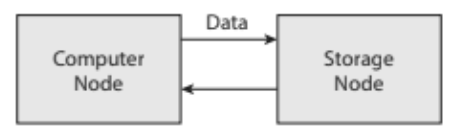
Figure 1: Image page 2, image 1Source: Hadoop.pdf (Page 2)
What You'll Learn
- Data and Code Movement in the Hadoop MapReduce Framework
- Hadoop and the Burger Analogy for Distributed Data Processing
- HDFS Architecture and Data Management Mechanisms
- MapReduce Word Count Application in Hadoop
Main Topics & Knowledge Domains
Data and Code Movement in the Hadoop MapReduce Framework
Data and code movement in Hadoop MapReduce is orchestrated through HDFS block placement, task scheduling, and the shuffle‑sort phase, ensuring locality and efficient parallel execution.
Hadoop and the Burger Analogy for Distributed Data Processing
The burger analogy illustrates Hadoop’s distributed data processing by likening each architectural element to a layer of a burger, making complex concepts accessible.
HDFS Architecture and Data Management Mechanisms
HDFS combines a master‑slave design, block‑level replication, and a write‑once‑read‑many model to deliver scalable, fault‑tolerant storage for Hadoop workloads.
MapReduce Word Count Application in Hadoop
The MapReduce Word Count application demonstrates Hadoop’s distributed processing model by counting word occurrences across large text datasets using mapper, combiner, and reducer phases.