Managing Interface Complexity Through Abstraction Hierarchies
Verified Concept Article • Factual Traceability Enabled
Summary OverviewAbstraction hierarchies reduce the combinatorial growth of point‑to‑point interfaces by providing layered, unified models that simplify data integration across heterogeneous systems.
Introduction
Managing interface complexity is a central concern in the broader field of Data Integration. As enterprises adopt new applications, replace legacy systems, and incorporate commercial off‑the‑shelf (COTS) packages, the number of direct connections between systems can increase dramatically. Without a systematic approach, each new link creates a point‑to‑point dependency that must be maintained, documented, and tested, leading to fragile architectures and escalating costs.
Point‑to‑Point Interface Complexity
The phenomenon of point‑to‑point interface complexity is illustrated in the source material on page 8, which highlights how each additional system adds a new interface, compounding the overall management burden. This complexity arises from several factors: changing computer systems, the need to integrate data for reporting and transaction processing, and the conversion of data formats when legacy applications are replaced. As more systems are added, the network of interfaces grows quadratically, making manual integration (see the sub‑article "Point-to-Point Interface Complexity in System Integration") untenable. Users must understand disparate query languages, data representations, and semantics, a challenge emphasized in the manual integration description on page 22.
Abstraction Levels in Interface Design
Abstraction hierarchies address the point‑to‑point problem by introducing layers that separate concerns. The source on page 21 presents two visual models of abstraction levels, showing how a unified global data model and a unified semantic can sit above heterogeneous data sources. By mapping each system’s native schema to a common abstract representation, developers create interface contracts at a higher level rather than for every individual pair of systems. This approach is the focus of the sub‑article "Abstraction Levels in Interface Design", which explains that all data must be represented using the same abstraction principle to provide users with a homogeneous logical view, as noted in the integration problem statement on page 20.
Benefits of Hierarchical Abstraction for Integration
- Scalability – Adding a new system requires only a single mapping to the global model, avoiding the combinatorial explosion of direct links.
- Maintainability – Changes in a source system affect only its mapping layer, leaving downstream applications untouched.
- Semantic Consistency – A unified semantic layer enforces consistent meaning across heterogeneous sources, reducing misinterpretation in analytics and reporting.
- Reduced Manual Effort – Users no longer need detailed knowledge of each system’s location and representation; the abstraction layer mediates interactions.
These advantages directly mitigate the challenges listed under "Complexity of Data Interfaces" (pages 7 and 9), where the focus traditionally rests on stored structures rather than the flow of data between them.
Role of Commercial Off‑the‑Shelf Packages
The rise of purchased vendor packages (COTS) described on page 9 introduces both opportunities and constraints. COTS solutions often embed their own integration APIs, which can be leveraged as standardized abstraction points. By configuring these packages to conform to the organization’s global model, firms share development and support costs while preserving the uniqueness of their system portfolio. However, the underlying uniqueness of each organization’s integration requirements means that abstraction hierarchies must remain flexible enough to accommodate vendor‑specific extensions.
Challenges and Future Directions
While abstraction hierarchies simplify interface management, they introduce new considerations: the design of the global model must be comprehensive yet adaptable, and the performance overhead of translation layers must be managed. Additionally, evolving data governance standards demand that the unified semantic layer incorporate provenance and security metadata. Future research emphasizes automated schema discovery, model‑driven engineering, and AI‑assisted mapping to further reduce the manual effort required to maintain abstraction hierarchies.
In summary, employing layered abstraction hierarchies transforms the chaotic web of point‑to‑point connections into a coherent, maintainable integration architecture, enabling organizations to scale their data ecosystems without sacrificing reliability or semantic clarity.
Visual References from Cited Pages
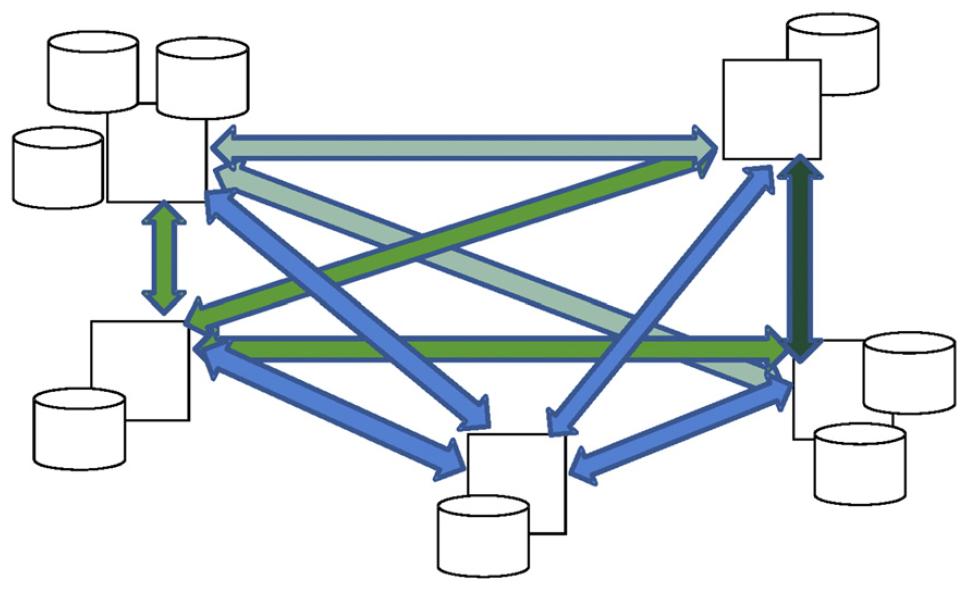
Figure 1: Diagram illustrating point-to-point interface complexitySource: DataIntegration.pdf (Page 8)
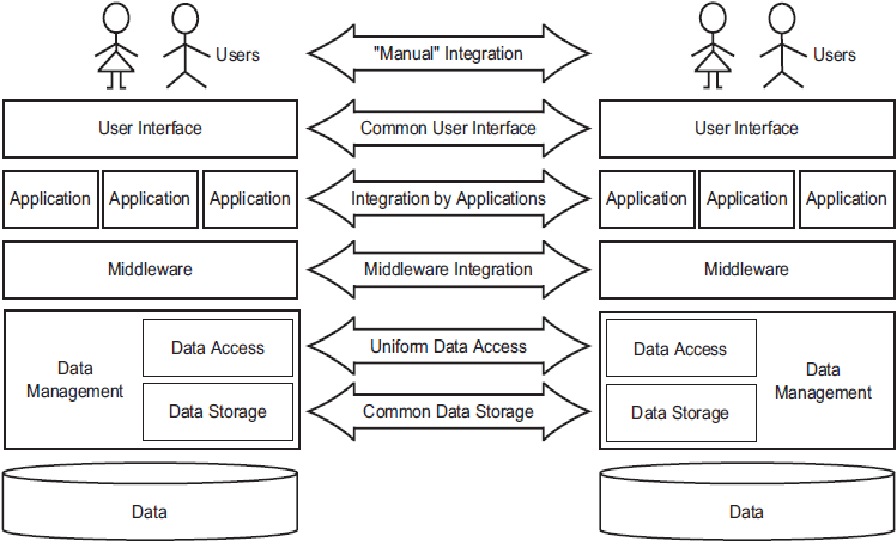
Figure 2: Abstraction Levels diagramSource: DataIntegration.pdf (Page 21)

Figure 3: Illustration of the integration problem showing a unified global data model across heterogeneous data sourcesSource: DataIntegration.pdf (Page 20)
Subtopics & Sections
Abstraction levels organize interface design into hierarchical strata that progressively hide technical detail, enabling unified interaction with heterogeneous systems.
Point-to-point interfaces create dense, hard‑to‑manage connections that amplify integration complexity, prompting the need for higher‑level abstraction approaches.
Related Topics
Incoming Backlinks
Other pages in this wiki that link back to the current topic.
Data Integration
The Data Integration wiki surveys the full spectrum of techniques, architectures, and lifecycle practices needed to unify heterogeneous data sources, from abstraction hierarchies and schema merging to personalized portals and real‑time data motion.
Point-to-Point Interface Complexity in System Integration
Point-to-point interfaces create dense, hard‑to‑manage connections that amplify integration complexity, prompting the need for higher‑level abstraction approaches.
Abstraction Levels in Interface Design
Abstraction levels organize interface design into hierarchical strata that progressively hide technical detail, enabling unified interaction with heterogeneous systems.